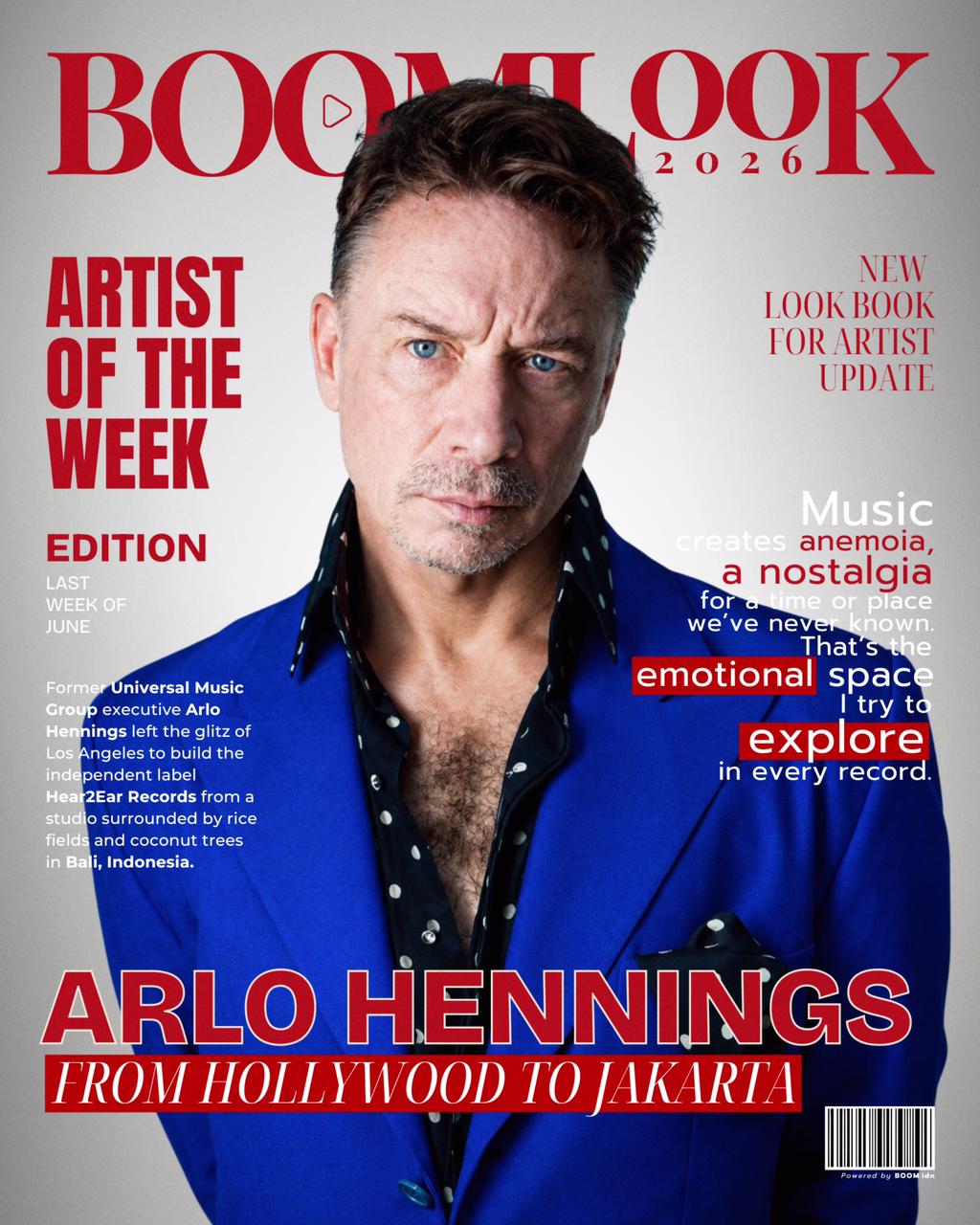
There are careers that follow a straight line, and then there are careers that follow the twists and turns of a winding highway.
Mine began in the most unlikely of places—not as the offspring of a celebrity, in a recording studio, or in a corporate boardroom, but as a nobody working the coat check of a small Minnesota teen dance hall. It was there, surrounded by musicians, dancers, and the unmistakable energy of live performance, that I first caught a glimpse of a world I would spend the next five decades exploring.
I never set out to become a record executive, an artist manager, an author, or a music producer. Each chapter of my life emerged from the one before it, carrying me from the folk revival and the cultural upheaval of Woodstock to the Minneapolis music scene, major record labels, international artist management, and eventually to a new life in Indonesia.
Along the way I worked with aspiring musicians and internationally recognized artists, witnessed the transformation of the recording industry from analog tape to digital streaming, and watched the traditional music business reinvent itself time and again. Today, another revolution is underway as artificial intelligence challenges many of the assumptions that have defined music creation, production, and distribution for generations.
This is not simply the story of my career.
It is the story of an industry in constant motion—told through the experiences of someone fortunate enough to have lived it from the inside... and survived.
These pages are more than a memoir. They are a collection of stories, photographs, documents, and reflections gathered over fifty years in music. Some are humorous. Some are difficult. Many have never been told publicly before. Together they trace a journey that spans continents, cultures, technologies, and some of the most significant changes the music business has ever experienced.
Whether you are a musician, songwriter, producer, student, historian, or simply curious about how the music industry has evolved, I invite you to travel with me.
Welcome to the Rock 'n' Roll Highway.
Every Journey Begins Somewhere
The Prison Dance Hall
Every career has a beginning. Mine didn't start with a record contract, a hit song, or a corner office at a major record label. It began with a part-time job at a neighborhood teen dance hall in Minnesota called The Prison.
The Prison was owned by 19-year-old Patrick Raines, an ambitious young entrepreneur whose own journey was just beginning. Years later, Patrick would become the longtime manager of jazz legend Al Jarreau, earning a respected place in the music industry. At the time, however, neither of us had any idea where our careers would eventually lead.
At the time, I was just another kid looking for work. Music wasn't yet a career plan. It was simply something that surrounded my generation. Rock 'n' roll was becoming the soundtrack of our lives, and every weekend young people gathered to dance, socialize, and hear local bands perform live.
My job was hardly glamorous. I worked the coat check, collecting jackets, handing out claim tickets, and returning coats at the end of the evening. It was the kind of work that made me almost invisible to the hundreds of teenagers passing through the doors.
But sometimes the best seat in the house isn't on the stage.
From my small corner of the building, I watched musicians unload their equipment, tune their guitars, joke with one another before going onstage, and then transform into larger-than-life performers under the lights. Night after night I witnessed the excitement of live music and the powerful connection between artists and audiences.
One of my favorite memories was spending time backstage with an unknown band called Three Dog Night, long before they became one of America's most successful rock bands. To me, they weren't yet legends. They were simply another talented group of musicians passing through The Prison, happy to joke around with a curious kid working the coat check.
Without realizing it, I was receiving my first education in the music business.
I learned that every successful performance required far more than talent. There were promoters, managers, sound crews, stagehands, club owners, and countless people working behind the scenes to create a single evening of entertainment. Long before I understood the terminology of artist development or A&R, I was watching those roles come to life in front of me.
I didn't know it then, but the dance hall was quietly shaping my future.
It taught me that music wasn't simply something you listened to. It was an ecosystem—a community of performers, entrepreneurs, dreamers, and risk-takers. I wasn't standing outside looking in anymore. Even as the kid working the coat check, I had become part of that world.
Looking back, it's easy to see why the journey had to begin there. Every opportunity that followed—from Woodstock to the Minneapolis music scene, from PolyGram and Universal Music to artist management, Indonesia, and the AI revolution—can be traced back to those evenings in a small Minnesota teen dance hall.
None of us knows which ordinary moments will change the course of our lives.
For me, it began with a rack full of winter coats and a front-row seat to a world I didn't yet know would become my life's work.
Woodstock
Three Days That Changed a Generation
History doesn't announce itself when it's happening.
Most of the young people who traveled to a dairy farm in upstate New York during the summer of 1969 believed they were simply attending another music festival. No one could have imagined that, decades later, a single word—Woodstock—would come to symbolize an entire generation.
I was one of them.
Like thousands of others, I made the journey because music had become far more than entertainment. It had become the voice of a generation questioning authority, challenging convention, and searching for something larger than itself. Woodstock wasn't just about the artists on stage. It was about the people in the audience who believed music could change the world.
Nothing could have prepared us for what we found.
The roads became parking lots. Cars were abandoned for miles as people continued on foot. What had been planned as a music festival transformed into an unprecedented gathering of hundreds of thousands of young people. Food was scarce. The rain turned open fields into rivers of mud. Yet, despite the overwhelming conditions, there was an extraordinary sense of community.
Strangers shared food, blankets, and whatever supplies they had. There was little concern for social status or material possessions. For three remarkable days, it seemed as though an entirely different society had emerged—one held together by music, hope, and the belief that people could care for one another without expectation of anything in return.
The performances were unforgettable, but the audience was equally important. Woodstock was not simply something we watched. It was something we lived.
Looking back more than half a century later, I realize that Woodstock gave me more than memories. It shaped the way I viewed creativity, freedom, and the role music could play in bringing people together. Long before I entered the music business professionally, Woodstock taught me that music possesses a unique power to transcend generations, politics, and geography.
I arrived as a young music fan.
I left believing that music could become a life's work.
In many ways, every step that followed—from Minneapolis to PolyGram, Universal Music, artist management, Indonesia, and ultimately the age of artificial intelligence—can be traced back to those three extraordinary days in August 1969.
Woodstock wasn't the destination.
It was the beginning of the road.
Finding My Guitar
The Minneapolis Music Scene
If Woodstock opened my eyes to the power of music, Minneapolis showed me how the music business actually worked.
Returning home, I found myself drawn deeper into a growing community of musicians, club owners, promoters, journalists, and entrepreneurs. The city's music scene wasn't built on the glamour of Los Angeles or New York. It was built on hard work, creativity, and a willingness to take chances on unknown talent.
It was an exciting time to be young and involved in music. Every week there seemed to be another band to discover, another venue opening its doors, or another musician convinced that success was only one great song away.
Unlike the audiences at Woodstock, I was no longer simply watching from the crowd. I was becoming part of the local music community.
The relationships I built during those years would shape my understanding of the industry for decades to come. I began to see that every successful artist depended on an entire network of people working behind the scenes—club owners willing to book unknown bands, promoters willing to take financial risks, journalists willing to write about local talent, and countless others whose names rarely appeared on album covers.
Minneapolis wasn't just producing musicians. It was producing an ecosystem that encouraged experimentation and originality. Long before the rest of the world recognized what would become known as the Minneapolis Sound, there was already an energy in the city that suggested something important was taking shape.
For me, those years became an education that no classroom could have provided. Every conversation, every club, every rehearsal, and every performance added another piece to the puzzle. I was beginning to understand that the music business wasn't powered by luck alone. It was sustained by relationships, persistence, timing, and an endless belief in the next opportunity.
Looking back, I realize I wasn't searching for fame.
I was searching for my place in a world that fascinated me.
Without knowing it, I was laying the foundation for everything that followed—from opening my own venue and writing about music, to working with publishers, record labels, and artists whose careers would take me far beyond Minnesota.
The road ahead was becoming clearer.
I just didn't know where it would lead.
Vitamin Q
Learning Success Begins with Failure
Every musician dreams of joining a band.
Mine didn't begin with success.
Before Vitamin Q, there was a short-lived group called The Tsetse Flies. The band itself never went anywhere, but it taught me one of the first lessons every musician eventually learns—rejection is part of the journey.
Ironically, history had another plan for some of its members.
The core musicians from The Tsetse Flies would later go on to form The Suburbs, one of the most influential and successful rock bands ever to emerge from Minnesota. At the time, of course, none of us could have known where our separate paths would lead.
For me, that next opportunity came with Vitamin Q, a Minneapolis-based band finding its own place in a city overflowing with musical talent. It wasn't simply my first serious band—it was my first experience living the life of a working musician rather than watching from the audience.
Until then, I had observed musicians from the coat check at The Prison and experienced the cultural phenomenon of Woodstock alongside hundreds of thousands of others. Now I was hauling my own equipment, rehearsing with fellow musicians, and discovering firsthand what it meant to build something together.
Being in a working band taught me lessons no classroom ever could.
Success depended on far more than individual talent. Every rehearsal required compromise. Every performance demanded preparation. Every member brought different musical influences, personalities, ambitions, and expectations. Learning to work together was every bit as important as learning the songs.
Like countless regional bands across America, Vitamin Q performed not because fame was guaranteed, but because we loved making music. We played for audiences that ranged from enthusiastic to indifferent, discovering that every performance offered another opportunity to improve.
Those years also gave me a new appreciation for the challenges musicians face beyond the stage. Booking performances, transporting equipment, promoting shows, and simply keeping a band together required determination and persistence. I began to understand that talent alone was rarely enough.
Looking back, I realize that Vitamin Q gave me something even more valuable than performance experience.
It taught me to see the music business through the eyes of the artist.
That perspective stayed with me throughout my career. Whether I was working in publishing, artist development, A&R, artist management, or record production, I never forgot what it felt like to stand on stage hoping an audience would connect with the music.
Years later, when I found myself evaluating artists, negotiating contracts, or helping musicians navigate their careers, I wasn't looking at them as products.
I was looking at them as people pursuing the same dream I had once pursued myself.
Vitamin Q may not have made me a rock star.
It made me a better record executive, manager, producer, and mentor because I never forgot what it felt like to be the artist.
There comes a moment in every songwriter's life when a song escapes the confines of the rehearsal room and takes on a life of its own. Until then, music exists only among bandmates, friends, and the audiences who happen to be in the clubs on a given night. A recording changes that. It captures a moment in time and preserves it long after the amplifiers have been switched off.
For me, that moment arrived through a friendship. During Minneapolis' vibrant music scene, I had become acquainted with Doug Podell, one of KQRS 92 FM's leading DJs and a passionate supporter of local music. I shared my original composition, "Me Magazine," with Doug, and he took it from there. His belief in the song led to its selection for the station's Best of the Beat compilation album, placing my work alongside some of the finest original music emerging from the Twin Cities.
Holding the finished album in my hands was unlike any feeling I had experienced as a performer. Club shows came and went. Applause faded with the last encore. But a record was permanent. It represented countless hours of writing, rehearsing, arranging, and believing that an idea born on a guitar could become something worth preserving.
Looking back, the achievement was about far more than having a song on an album. It marked the point where I began to think of myself not only as a guitarist and performer, but as a songwriter. That shift in identity would shape every chapter of my career that followed—from artist development and record production to managing recording artists, publishing books, and eventually producing music in the age of artificial intelligence.
High Rise Babies
My First Recording Session
There is a special excitement that comes with hearing your own song played back through studio monitors for the very first time. Until then, music exists in rehearsal rooms, on stages, and in your imagination. Recording gives it permanence.
My first recording session took place in an unlikely setting—the basement studio of a young Minneapolis musician named Yanni.
Long before he became an international recording artist filling concert halls around the world, Yanni owned a modest sixteen-track recording studio in his home. During the years I played guitar with Vitamin Q, I frequently shared the stage with his band, Chameleon. We even worked with the same booking agent, Jimmy Mann, who represented Chameleon, Obsession, and Vitamin Q throughout Minnesota's ballroom circuit.
Those ballroom dances were a world unto themselves. On a Saturday night we might perform for a thousand teenagers in Waconia, yet return to Minneapolis the next day and be virtually unknown. Regional success didn't always translate into hometown recognition, but it taught us how to perform night after night before enthusiastic audiences.
It was in Yanni's basement studio that my first original composition, "High Rise Babies," was recorded.
None of us knew where our musical journeys would eventually lead.
Yanni's certainly led farther than most.
One memory still makes me laugh. During a break at one of our shows, he pulled me aside and revealed what he claimed was the secret to success in the music business.
"You've got to have a hairy chest," he said with complete sincerity, pointing proudly at his own.
Whether that advice had anything to do with his remarkable career—or whether having a television star girlfriend who introduced him to Oprah helped a little more—is still open to debate.
Years later, after Yanni had become an international star, I attended one of his concerts at Minneapolis' Orchestra Hall and went backstage to say hello. Unsurprisingly, he didn't remember me. Fame has a way of compressing thousands of faces into a blur of memories.
I never expected to become Yanni's story.
But I treasure the fact that, for a brief moment in Minneapolis music history, our paths crossed before either of us knew what the future would hold.
On Broadway
Building Opportunity Instead of Waiting for It
When most bands dreamed about success, they imagined finding a better club to play, attracting a larger audience, or catching the attention of a record company. Vitamin Q chose a different path.
Our band had built a large rehearsal hall, and one day we began asking a simple question: Why couldn't it become something more?
The Minneapolis music scene was thriving, but it was also saturated. Hundreds of bands competed for club dates seven nights a week, each hoping to attract the same audiences and the attention of the same promoters. Instead of fighting for a place on someone else's stage, we decided to see if we could persuade the audience to come to us.
That idea became On Broadway.
What began as a rehearsal space evolved into a venue where original music could be performed in a more intimate setting. It was an entrepreneurial experiment born as much from necessity as ambition. Rather than waiting for opportunities, we tried to create our own.
For a time, it worked.
But success brought challenges we hadn't anticipated.
Although On Broadway operated peacefully, city officials eventually accused us of operating a "tippling house"—an old legal term generally used to describe an establishment selling or serving alcoholic beverages without the proper licensing. That accusation, rather than the music itself, became one of the factors leading to its closure.
There was another challenge as well. Located in the heart of a predominantly Black neighborhood, respected community leaders understandably wanted the venue to showcase more Black artists and better reflect the surrounding community. Their expectations were reasonable, but they placed demands on a small independent operation that we simply weren't equipped to meet. Between regulatory pressure and growing community expectations, the experiment came to an end.
Looking back, I don't see On Broadway as a failure.
I see it as my first education in music entrepreneurship.
Long before I worked in artist management, A&R, record production, or founded Hear2Ear Records, I had already learned one of the industry's most enduring lessons: creating opportunity is often harder than finding it—but it is also where innovation begins.
During Vitamin Q’s 5-year run, I also published a chapbook of poetry called “Tomorrow Never Answers.” The book was curated and sold by author and publisher, Lawrence Felingetti in his New City Lights bookstore in San Francisco.
In 1985, I released a double album screenplay called “Burden of The Beat – the Eyelid Movie.” The release was documented as historical Minnesota archive by the Minnesota Historical Library Catalog #175.
Mill City Distribution
When Records Became More Than Music
By 1986, I had spent years looking at the music business from the stage. I understood rehearsals, performances, songwriting, and recording. What I didn't yet understand was how records actually found their way into stores and, ultimately, into listeners' hands.
That changed when I became Sales Manager for Pappa John Kohlstad's Mill City Record Distributors.
Mill City was more than a warehouse. It was a crossroads where artists, independent labels, retailers, and entrepreneurs all converged. My job was to promote and distribute recordings from more than one hundred national and regional independent labels. Every day offered a new lesson in how the business really worked.
One of those lessons arrived in the form of a former schoolteacher named Bob Feldman.
Bob had just launched a tiny independent label, naming it Red House Records after his own home. At the time, neither of us could have predicted that it would become one of America's most respected folk music labels.
Starting a record company is equal parts excitement and uncertainty, and Bob experienced plenty of both. When he released Greg Brown's first album on Red House, he called me almost every day—not for sales figures alone, but for reassurance. Like many new entrepreneurs, he wanted to know whether he was making the right decisions and whether the label had a future.
Watching Red House Records grow from a one-man operation into a nationally recognized label taught me an invaluable lesson. Every successful company begins as someone's idea, nurtured through persistence, belief, and countless conversations that no history book ever records.
Years later, when I found myself helping build artists, managing careers, and launching my own projects, I often thought back to those conversations with Bob. They reminded me that every major success begins as a small leap of faith.
PolyGram Music
The Right Place at the Right Time
In 1989, I signed a major co-publishing and production contract with PolyGram Music International. The deal involved the signing 6 additional songwriters from Minneapolis. The St. Paul Pioneer Press called it “One of the most significant developments in the history of Minnesota music history.”
The transition from Minnesota's independent music community to a major international record company didn't happen overnight. It was the result of years spent learning every side of the business—from performing and songwriting to record distribution and artist development.
When the opportunity came to join PolyGram Music, it felt like the natural next step rather than a sudden leap. In truth, it was exactly that—a leap from dream to reality.
Working for a major label opened an entirely new world. Decisions made in conference rooms shaped careers, launched recordings, and influenced what audiences eventually heard on the radio. For the first time, I found myself inside the machinery of the music industry instead of looking at it from the outside.
It was an education that would prepare me for everything that followed.
Managing Shawn Phillips
For more than two decades, I had the privilege of managing A&M recording artist Shawn Phillips—one of the most gifted and original singer-songwriters of his generation. Our relationship extended far beyond artist management, encompassing recordings, concerts, international travel, business strategy, and a lasting friendship. Those years offered a front-row seat to the creative life of an extraordinary musician and remain among the most rewarding chapters of my career.
Bali: A New Chapter
After decades in the American music industry, my career took an unexpected turn when I relocated to Indonesia. What began as a personal journey evolved into an entirely new professional chapter, opening doors to music production, artist development, education, writing, and cultural exchange. Living and working in Indonesia broadened my perspective on music and creativity while introducing me to a new generation of artists and audiences. It also inspired my memoirs and laid the foundation for many of the projects that continue today.
Along the way on my new music highway, I published two memoirs, “Guitarlo” (2016) and “SOLO-10 Years in Bali (2022).
Indonesia: From Hollywood to Jakarta
Leaving Los Angeles marked the beginning of an unexpected new chapter. Over the next sixteen years, I built a second career in Indonesia, managing several of the country's leading recording artists while serving as Indonesian Director of A&R for the American independent label, MoonJune Records. Working across cultures expanded my perspective on music, artist development, and the rapidly changing global music industry.
Those years also inspired my writing, led to the founding of Hear2Ear Records. What began as a move halfway around the world became one of the most rewarding and transformative periods of my life.
This website edition has been prepared as a continuous literary biography. Image and media placeholders have been removed so the narrative can be read without interruption. Historical photographs, audio, videos, and supporting documents are intended to appear in the separate Stories and Collections sections of the website, where they can provide additional context without interrupting the flow of the biography.