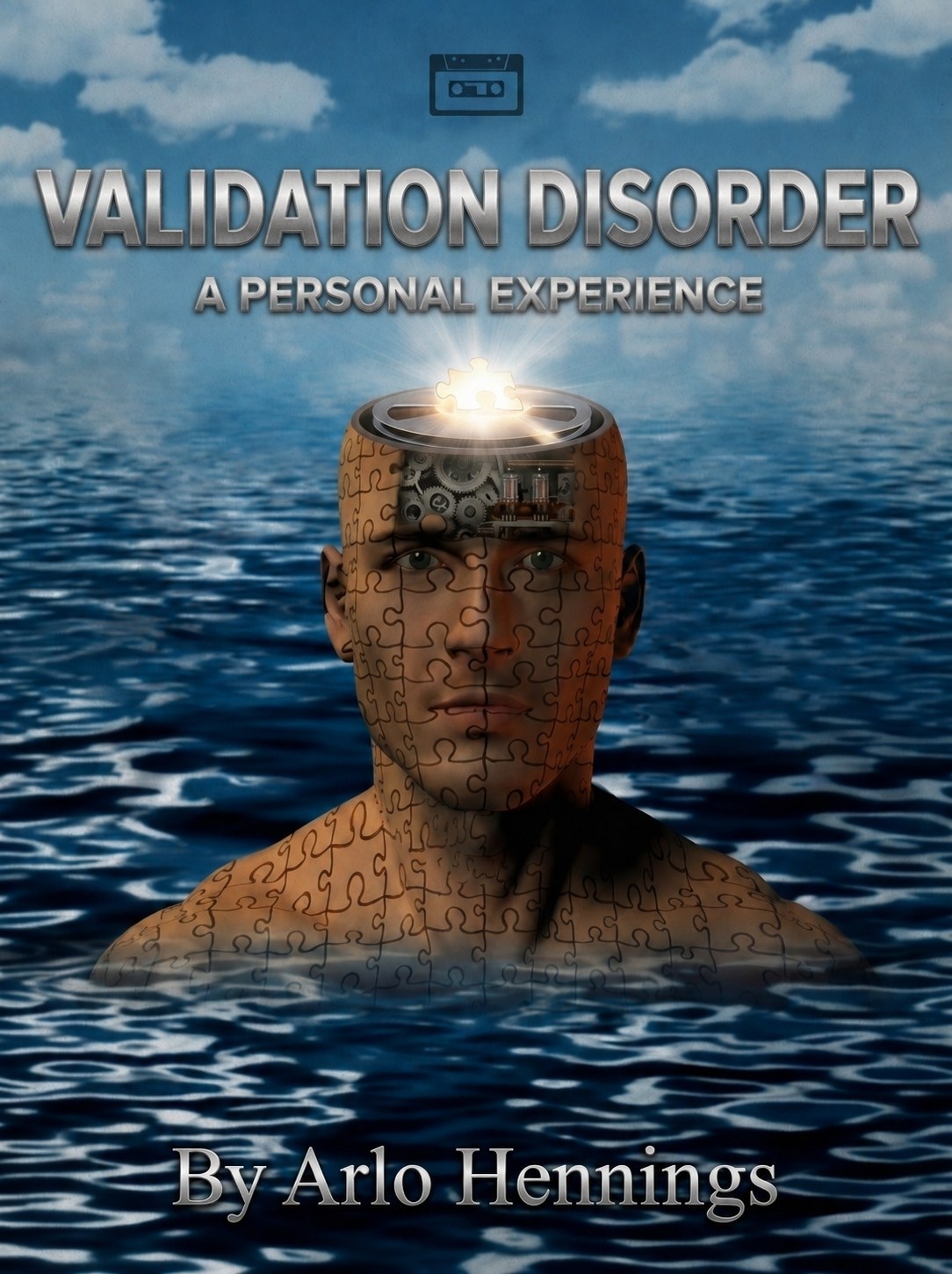
Welcome to Chapter X of my Tales of the Rock ‘n’ Roll Highway memoirs.
If you stumbled onto this page looking for a standard, glossy music industry success story about gold records and glamorous after-parties, you are in the wrong corner of the internet. You might want to hit the back button now. But if you came here to find out what happens when an unstoppable work ethic collides with an immovable, sequin-jacketed black hole of psychological dysfunction, pull up a chair.
Before we cue the tape, let’s get one thing straight: I am not telling this story to “get even.” Getting even implies that you are dealing with someone who operates on standard human logic, scales of fairness, or a functioning conscience. Trying to settle a score with a pathological validation seeker is like trying to play chess with a tornado—it’s a massive waste of energy, and you’re just going to end up with a board stuck in your drywall. No, I am sharing this because it is a wildly crazy, utterly ridiculous, and ultimately hilarious cautionary tale about what happens when you accidentally co-sign a dream with a human manifestation of Validation Disorder.
Let’s face it: crazy deals, unhinged egos, and the colorful sociopaths who make them are completely synonymous with being in the music business. You can’t have one without the other. It’s an industry built on smoke, mirrors, and people who desperately want you to believe they are the smartest person in the room. But even by the music industry’s notoriously warped standards, my first real business partner was a masterclass in the absurd.
The music industry wasn’t a choice for me; it was a mandatory psychological sentence. I didn’t have a trust fund, a legacy name, or parents willing to buy me a guitar, let alone finance music school. My brother openly mocked me, and the rest of polite society dismissed me as a delusional dreamer. Built out of pure friction and an unwavering drive to prove everyone wrong, I forged ahead anyway, learning the business from the ground up without two nickels to rub together.
So, when my five-year stint in a local band fell apart, I decided to pivot into the production side of things. That was when I struck what I thought was absolute gold: a guy who seemed to possess the exact same manic enthusiasm for the studio. He had completed one semester at a prestigious music college, played keyboards, and knew a thing or two about commercial pop arrangements.
Unfortunately, he was also a total nerd who had seemingly frozen his cultural development around vintage television reruns, possessed the chaotic energy of an unbridled toddler, and carried the slick, desperate charisma of a snake oil salesman. He was immature, wildly unreliable, and constantly jumped from one failing cover band to the next. But his creative energy was infectious, and I mistook his frantic hunger for actual professional ambition.
It was only years later, after the smoke cleared and the bankruptcy papers were filed, that I finally understood what I had actually invited into my life. I hadn’t just signed a loose business agreement with a flawed human being; I had locked myself into a psychological script with a textbook case of pathological validation seeking. Working with this guy didn’t make me a music executive. It made me a catastrophe insurance adjuster following a tornado disaster across the state line, desperately trying to calculate the structural damage while the storm itself put on a sequined jacket and demanded a standing ovation.
Looking back, our entire seven-year partnership played out like a diagnostic manual brought to life, starring a character so over-the-top ridiculous that you couldn’t write him into a sitcom without a network executive telling you to tone it down.
The Superficial Identity was the first warning sign I completely walked past. He lacked a stable, authentic human core, operating instead like a mirror that reflected whatever environment he wanted to exploit. In the studio, he was a creative sponge, absorbing the musical vocabulary, style, and jargon of whoever was currently standing near the mixing console. He didn’t have a personal identity; he wore his current interests like a costume, shifting his tastes, his vocabulary, and his entire worldview overnight depending on who he was trying to impress.
This total lack of an internal anchor fueled an Insatiable Need for Attention that operated like a bottomless pit. No amount of praise or reassurance could ever fill his tank. If the spotlight wasn’t firmly trained on him, his psychological circuitry would literally short-circuit. I watched this play out during a massive, high-stakes concept project we were recording. When he was supposed to be delivering on critical engineering commitments, he would instead freeze the entire production, miss deadlines, and literally lie flat on the studio floor with his thumb in his mouth, weeping over his latest personal drama. The entire studio environment—and my wallet—had to stop and cater to his emotional weather. He required the entire room to drop their livelihoods and comfort him, making himself the center of gravity while the clock ticked and the bills mounted.
When the attention wasn’t actively comforting him, his Fragile Ego and Hyper-Sensitivity made him a walking landmine. Any moment where he wasn’t the universally acknowledged genius felt to him like a devastating personal assault. This became comedy gold—and a tragedy—when we secured an arts grant to exhibit our multimedia project at a prominent regional museum. The media showed up, the cameras flashed, and the limelight turned on. The moment the spotlight hit us, his behavior instantly warped. Instead of celebrating a shared victory, he became fiercely self-centered, actively eclipsing my role and rewriting history on the spot to ensure the reporters saw him as the sole mastermind. He simply could not tolerate sharing a single crumb of accolades.
When positive attention wasn’t available, he immediately pivoted to Playing the Martyr. If he couldn’t get envied, he would settle for being pitied. After a catastrophic wedding night where he discovered his newlywed wife in a highly compromising situation with his roommate, he didn’t just seek counseling; he used the trauma as a permanent, lifetime get-out-of-jail-free card. He weaponized his personal pain to excuse his erratic behavior, demanding that everyone look past his broken professional commitments because he was the ultimate victim of the universe.
As we pushed further into the business, his Pathological Lying and Exaggeration became the literal bedrock of our day-to-day reality. He spun grandiose tales to construct a larger-than-life persona, frequently bragging about a wealthy grandmother from whom he was supposedly in line to inherit a massive fortune. He used these fabrications to project an aura of unearned status, masking his deep financial insecurity with illusions of upcoming wealth, all while comfortably leaving me to absorb every single real-world expense.
To him, Exploitation of Relationships wasn’t a bad habit; it was a business model. People were not human beings to him; they were validation sources and financial shields. At my sole expense, I upgraded our setup to a professional multi-track studio. To finance the gear, a lease was required, and my wife signed the papers using her modest income from waiting tables. The contract totaled fifteen thousand dollars, placing my family’s future firmly on the hook for the hefty monthly payments. My partner, of course, saw his role strictly as the “talent” who brought people through the door, flatly refusing to risk a single dollar of his own. He was perfectly comfortable letting my family carry the financial life-and-death risk while he treated the studio like his personal, zero-cost playground.
By the late 1980s, I organized a high-stakes trip to the West Coast to pitch our entire roster of independent songwriters to major record labels. We survived entirely on my family’s hospitality and used my dad’s car to get to appointments. After a grueling string of rejections, his fragile ego broke, and he threw a tantrum and wanted to quit. I forced him out of bed and pushed us to our final appointment: a sit-down with the President of a legendary global music publishing syndicate.
During that career-defining meeting, as the executive listened intently to our tape and asked for more material, my partner literally put his feet up on the executive’s desk, treating the breakthrough like a joke. He took the entire venture with a grain of salt because he had absolutely no skin in the game; he was just along for the ride until the money arrived.
Weeks later, against all odds, the syndicate made a historic offer, launching a monumental 50/50 co-publishing and artist development deal. It was a monumental, unprecedented contract for our local music scene. But before the ink was even dry on the paperwork, his Triangulation and Drama Manufacturing kicked into overdrive. At our contract signing party, a lifelong friend pulled me aside and delivered a chilling, prophetic warning: “He is going to rob you.”
I was too deep in, trapped by the momentum of my own dream, and helpless to stop the train. My partner immediately launched a rogue, shadow production company that operated in direct competition against our joint venture, trying to pit different factions of the industry against each other. He began double-billing our parent syndicate behind my back, running up massive, recoupable debt that I would personally owe out of future profits. He used the syndicate’s name to cut backroom side deals that benefited him alone, essentially treating our hard-won corporate contract like his personal ATM.
He manufactured absolute, unadulterated chaos across our entire talent stable. He was a jumping bean, sleeping with interns and cutting worthless vanity tracks with zero-talent acts that infuriated our corporate backers. He even mounted a shadow campaign to secure a record contract with an industry contact, creating an environment so uncomfortable that the label rep eventually pleaded with me to rid her of his unwanted advances.
Predictably, under the weight of his toxic behavior, our stable of artists began to scatter like people fleeing a burning building. One major guitarist took the advance money and vanished onto a stadium tour with a pop superstar. Another core artist completely spiraled into addiction and joined a motorcycle gang, explicitly stating he ran away because he fundamentally distrusted my partner. Songwriters packed their bags for other cities in pure frustration, and others vanished in the middle of the night just to escape the toxic atmosphere he created. Our entire roster flew the coop.
The final collapse was a masterclass in a Chronic Empathy Deficit. He had a habit of getting high, getting access to industry VIPs, and shooting his mouth off. After he insulted the head of a major sister label, the corporate President finally snapped, tired of the constant shenanigans, and terminated our entire contract.
I had poured my entire life into reaching that peak. I had a newborn baby and a wife at home, yet my partner cared so little about the human cost that his own father had to physically force him to visit the hospital when my child was born. When the financial fallout forced me into total bankruptcy, my partner literally laughed.
What followed was the final stage of the script: Emotional Manipulation and Gaslighting, followed by a swift and Cruel Devaluation. He executed the classic toxic reversal, telling the entire local music scene that the failure was entirely my fault. In private, the mask dropped completely. He didn’t even deny what he had done; he literally taunted me, singing nursery rhymes about how I was going to be sued, knowing I was too financially ruined to afford a lawyer. His favorite shield against accountability wasn’t an apology; it was a smirk and his favorite phrase: “You can’t win a pissing match with a skunk.”
By the early 90s, we went our separate ways. Decades later, despite the old newspaper clippings, the legal paperwork, and the archival audio footprints, he completely refuses to credit me for a single thing on his social media or professional bios. He is the ultimate credit thief, hoarding the history to make himself look like a solo genius, completely erasing the person who built the foundation he stood on.
The Post-Disaster Adjustment
True recovery didn’t begin when the partnership ended; it began when I stopped looking at the wreckage through the lens of normal business ethics and started looking at it through the lens of psychological comedy. For years, I blamed myself for being too easygoing, too trusting, and for allowing myself to be lured into a delusional, non-existent collaboration.
But healing required me to realize what I was actually up against. You cannot apply logic, fairness, or standard business practices to a person suffering from an incurable deficit of self-worth. They do not operate on the rules of mutual benefit; they operate on the rules of psychological piracy. He used to call our big break the “don’t deserve it deal,” and for once in his life, he was telling the absolute truth—he didn’t earn it. He was just sitting in the right chair at the right time, looking for a host to build the structure he wanted to steal.
Realizing that his behavior was a systemic, predictable script—rather than a personal failure on my part—was the closure I never got from him. I walked away with my dream in ashes, but I gained an unshakeable, comedic emotional armor. I learned to recognize the chameleons before they ever step foot in a studio.
When the contract dissolved and the dust finally settled on that massive corporate deal, all I truly had left to show for those seven chaotic years was a single, cardboard box. It didn’t contain money or assets; it was packed to the brim with old demo tapes and raw songs from that incredible roster of independent songwriters we had tracked. For decades, those tapes sat in the dark.
But a funny thing happens when you wait long enough for the highway to clear. Forty years later, I opened that box. I took those very same songs back into the studio, reproduced them with modern sensibilities, and released them into the digital world. Today, those songs are turning into hits, racking up streams across Spotify and YouTube.
It turns out the final joke was on the skunk. My judgment about my business partner may have been entirely wrong, but my judgment about the music was absolutely right. The structures he stole were hollow, but the foundation I built was made of timeless art. Just another wild, absurd tale from the rock ‘n’ roll highway.
Legal Disclaimer: The content featured within this memoir section constitutes the personal reflections, subjective recollections, and artistic expressive viewpoints of the author. To preserve privacy, accommodate the passage of time, and protect individual identities, all names, specific locations, precise dates, and identifying physical characteristics have been structurally fictionalized, modified, or rendered as composite character archetypes. Elements of this text utilize hyperbole, satire, and comedic caricature to illustrate generalized interpersonal and psychological behavioral dynamics within historical corporate settings. Any resemblance to actual persons, living or dead, or to specific real-world corporate entities is entirely unintentional and coincidental. The information provided herein is intended solely for general narrative, storytelling, and cultural entertainment purposes.