
There are moments in life when you know you’ve arrived. Walking into the offices of PolyGram Music Publishing wasn’t one of them. Not at first.
To Marty Weintraub and me, it was simply another appointment on a schedule that had taken months of persistence to create. We weren’t thinking about careers. We weren’t thinking about history.
We were thinking about songs.
Everything that had happened before that day had been about getting into the room. What happened next would determine whether we belonged there.
People often imagine those trips to Los Angeles were financed by record companies or generous investors. Nothing could have been further from the truth. Every airline ticket represented another financial gamble. Every trip required money we didn’t really have.
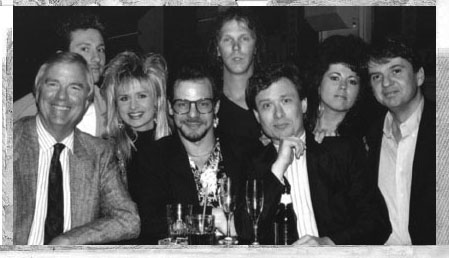
Back row: Dave Barry, Marco Dardanis, Laura Schlieske, Gina Felicetta.
1989.
After months of telephone calls, airline tickets charged to a credit card, and enough rejection to make most people quit, we finally walked into the office of Dean Kay, President of PolyGram Music Publishing.
He listened to our songs. One after another.
When the final song ended, he looked up and asked:
“What are you looking for?”
Marty and I answered almost in unison.
“A production deal.”
Dean reached for his calendar.
“I’ll come to Minneapolis.”
Within weeks he was in our studio.
Soon afterward our attorney was talking with PolyGram’s attorney.
The impossible had become real.
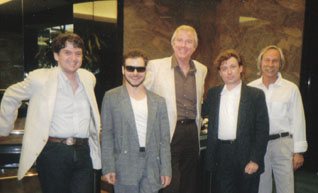
My father gave Marty and me a place to stay. He loaned us his car. He let us use his telephone to confirm appointments. He fed us. Those simple acts of generosity made an impossible trip possible.
After weeks of negotiations, the agreements were signed.
The Arlo Hennings Publishing Company also became the publishing home for six other Minneapolis songwriters whose work would now be represented through the PolyGram agreement.
For a group of musicians who had begun with nothing more than a music business directory, a stack of cassettes, and relentless persistence, it was almost impossible to believe.
The St. Paul Pioneer Press would later describe it as:
Not bad… for two guys who started with little more than a suitcase and a song.
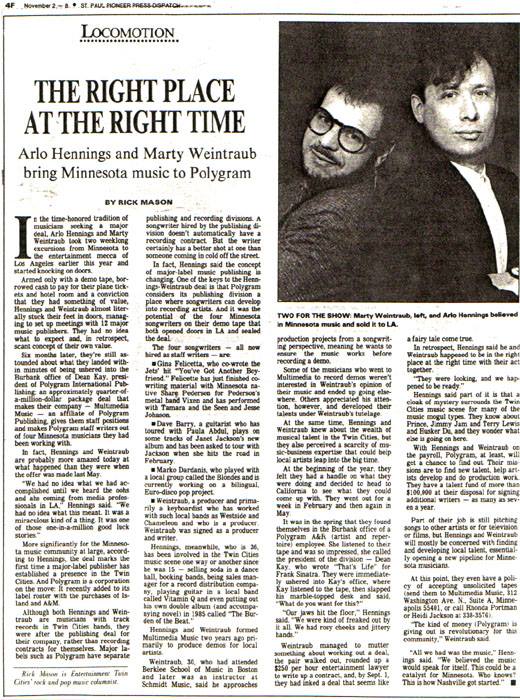
St. Paul Pioneer Press