As if to warn cars of road repairs, I stuck out my orange Day-Glo sneakers and got an occasional driver to slow down. Until, that is, each passerby saw my kinky, shoulder-length hair, twisted as the weeds, whipping the back of my sunburned neck. Then I got the “fuck you” finger.
On the fifteenth day of the fifth month, on the eve of the new moon, on the walleye opener—which it was that day back in Minnesota—I’d been stuck at a pullout on I-80, somewhere in Western Nebraska, for two days. I was surrounded by endless cornfields and one tiny brick-red building with one toilet. No toilet paper, no benches, no shade, nothing.
The plains broke up before me into gullied, washed-out hills. Heat was everywhere. The sky burned above me. Even the blue of the sky was inflamed, and its flare singed my head. The road ahead was like a stretched piece of black taffy. The tar was so hot that my sneakers left marks on it. Nothing moved along this road; just the cry of a crow and my sweaty body against the cracked tan land.
“Who ever said hitchhiking was illegal?” I grumbled to the crow.
In my left hand, one suitcase contained my clothes. In my right hand, I carried my guitar. “What do these weigh, fifty pounds each?” Every mile the baggage got heavier.
I propped up my suitcase like a chair, laid back into last night’s sleepless slump, and twiddled my thumbs. I plucked a weed from the ground and began to chew on its stem.
“What I need is a gimmick to get someone to stop,” I contemplated.
Yesterday I had begun making a sundial out of roadside rocks. All that was left to do to tell time was to insert a stick in the middle. I was on my knees trying to balance a stick between two rocks. I estimated the stick’s shadow. Twelve fifteen p.m. It was lunchtime.
I grunted, opened my suitcase, and grabbed a jar of jam and a spoon. The strawberry jam tasted sweet and warm. It hit the spot. I ran my tongue over the spoon. The next thing I did was remove my white socks and tie them around my neck to resemble a collar.
“Don’t you get it?” I said in disbelief to a gopher running across the road. “I’m a priest.”
For the next few hours, I made the sign of the cross with my thumb as I blessed each passing car.
The late afternoon heat lifted the yellow lane divider off the road. The effect created an imaginary highway that blended with the sky, leading to a place where only vultures hung out.
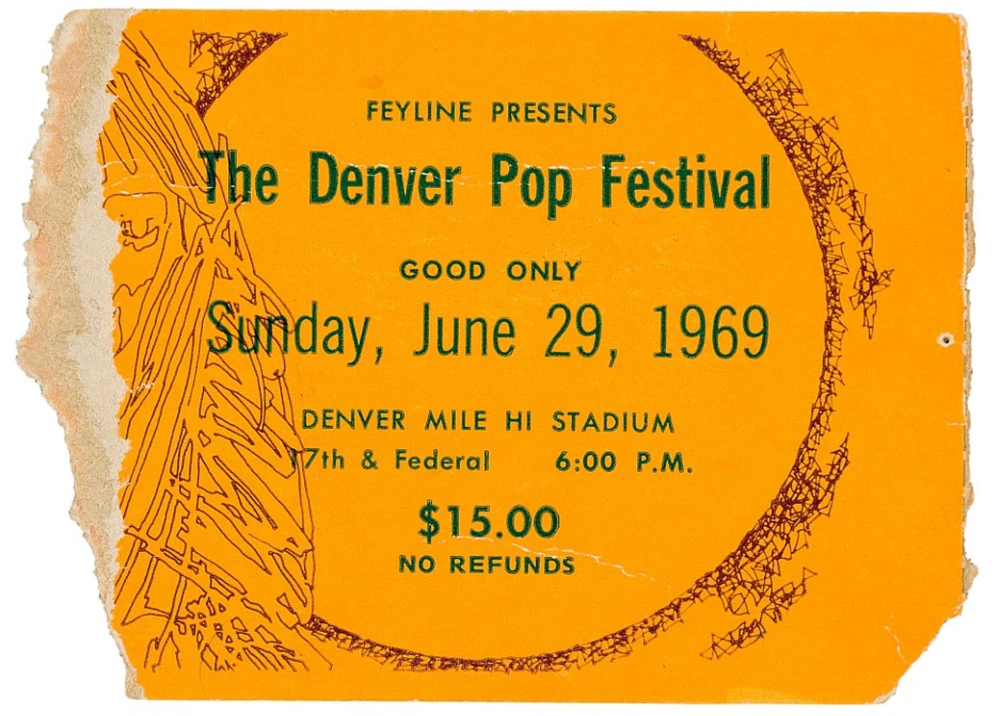
I wondered about this crazy trip. “The Denver Pop Festival? The Jimi Hendrix Experience?”
“There was no going back,” I said with the tone a captain uses to inform his shipwrecked crew that instead of being doomed, they’ve been chosen.
I stopped in the middle of the road and bit down on the spoon. A sudden urge to puke struck me. The jam was starting to make me sick.
Feeling dizzy, I dropped my suitcase and balanced the jar of jam in my hand. The spoon made a loud clank as it hit the bottom of the jar. “I’m really thirsty. Over there, I see a faucet on that building.”
I wandered over to a construction shed, made my lips like a garden hose, turned on the faucet, and sucked. The water was alkaline, like soapy water. I gulped it down anyway.
“What does heat stroke feel like?” I felt green.
From around the bend, a semi blasted its horn. Its air brakes hissed like a thousand pissed-off snakes. I counted the wheels as it slowed: 1, 2, 3, 4, 5, 6, 7, 8, 9, 10, all the way up to 18. It lurched to a stop, and I ran to the driver’s window.
After a few words with the driver, I climbed into the cab. I had a lift all the way to North Platte.
The truck driver’s legs barely reached the pedals. The color of his bald head matched the truck’s buffed white enamel paint. Judging by the redness of his window-rested, sunburned arm, he must have been driving for days. When I looked into his face, my red face looked back inside his mirror sunglasses.
An unfiltered cigarette balanced between his right ear and a black mole. At the end of his muscular arms were hands missing their fingers from the knuckle.
“Tired of walking yet?” the driver said in a gravelly, mixed-with-cigarette-smoke, burnt-coffee-and-bacon voice.
I wiped the sweat from my forehead.
He was glad to have company. “I’m just a little thirsty, that’s all.”
He nodded in a friendly way and passed me a canteen filled with water. Then, quickly shifting moods, blended the gesture with a sense of disparity.
I watched, half-dazed, from his seat at the passenger-side window as he worked the shift stick until the truck’s smokestack snorted out a large, black cloud of smoke. In a sudden lurch, it jerked forward.
“Why are you wearing a sock around your neck?” he asked.
“I thought if I looked like a priest it might get me a ride,” I answered.
“OH, I see,” was all he replied.
After we reached the cruising speed of 55 miles per hour, a loud s-h-h-h-h-h sound filled the cab.
“I think your tires are bald,” I guessed. “It sounds like the wind licking a mast of worn sail canvas.”
He kept on driving. Several miles later, I asked if he had ever considered a name for his rig. He said no.
He lowered his window, blew out a wad of tobacco, and looked at my hair and guitar case. “Where you headed?”
“The Denver Pop Festival at the Mile High Stadium.”
The conversation ended. My stomach hurt too much to talk. Hours passed, telephone pole by telephone pole. Around the next bend, the semi blasted its horn. Air brakes hissed. They rolled to a stop.
“This is where I turn north.” He pointed his finger over his shoulder. “Further on south there’s a café a few miles down the road.”
Later that day, in front of a diner, I fell from the back of a farmer’s hay wagon. I was panting near a ditch as he searched for water. The air was clear and dry. My mouth was cracked, and my face was badly sunburned. Beyond the ditch weeds were burned grass and clumps of earth and sand so bright it was hard to look at. The heat, silence, barren hills, and blank sky gave me a feeling of great, intense space.
I felt faint.
“Not too fast,” an imaginary voice said, holding a cup of water to my lips. “Can you stand?”
The imaginary face blocked the sun, and I sipped the imaginary water slowly. He nodded. “Let me lean on you, and I’ll make it.”
Once inside the diner, I felt as if a flashlight had been removed from my eyes. It took a few moments before the black box began to fill with shapes. The long, boxcar-shaped room was actually a bar that offered chalkboard eats: chips, one kind of beer, and stomach relaxers near the cash register.
I dragged my cargo across the floor, drawing the attention of several pork-belly men. They swiveled on their barstools and stared at me, beer mugs parked below swoopy jaws.
I pushed my suitcase beneath a table directly below an air conditioner. I collapsed into the cool booth, closed my eyes, and floated.
I stretched my sore stomach muscles. “Where am I, anyway?”
Dead ahead, two miles—Buffalo Grass, a sign read above the bathroom door.
I tested my strength with the suitcase.
“Versus an exit ramp in the middle of nowhere, I think I stand a better chance of getting a ride on Mars.”
The beer-sign clock behind the cash register read almost 6:30 p.m. I had no idea how far I had to go or where I might spend the night.
I bought a Coke and sighed.
Before I made it to the end of the parking lot, I started to sweat. The heat pushed against my body, making each step heavy, as if I was walking through a tide pool. My underwear felt heavy and damp; it stuck to my legs like a soggy swimsuit.
I climbed a long, long hill into another kind of country. The fences had old boots on the posts. No brush, no trees, just a vast blue-green ocean of grass and corn, maybe seven feet tall.
After an hour of walking, I read a bullet-holed, tilted sign. “Buffalo Grass, population 39.”
I cleared the sweat from my eyes. “I can’t drag this suitcase another inch.”
The two streets of the town were broad, broader than they needed to be, and there was a pallor of dust in the air. Tumbleweeds rolled in empty lots between the buildings. The sheet-metal grocery store and single-pump gas station had squeaky, rusted signs and weather-torn billboards.
I looked down the empty country road past dark mounds of farming refuse, back at the remnants of a grain elevator, and farther on out ahead. There was a derelict tractor in front of me. The wheels were missing, the motor picked clean by metal-eating buzzards. Between its broken headlights was a symbol of a golden bull with man-like legs.
I got down on my knees, sat on the tractor’s skeleton, and fumbled with a series of levers.
A humid, static-charged wind toyed with my hair. I saw lightning on the horizon. The daylight was starting to be sponged up by the clouds.
Nearby, a farm dog sniffed at the air. A horse whinnied at the dog; then it bolted across a field toward the light inside a barn. Birds, the last to act, jumped from telephone wires and disappeared in the grass.
I had never seen darkness like it before. It was like an eclipse. Even the animals were jumpy. “Just a little rain,” I speculated.
Suddenly, I saw a car coming! The shipwreck trick—hurry!
I made a barricade out of the suitcase.
When the car got close enough, I jumped up and down behind the suitcase. A pink-colored car with whitewall tires slowed until its oval-shaped headlight stopped at my suitcase.
I approached the passenger’s side and waved at the black glass. The window came down, and the smell of beer came out.
“Hi, where you going?” a young, pretty blonde girl said, friendly-like.
I looked in and winked. I answered the girl in a flirtatious manner.
The girl rolled up the window and returned to the car’s dark interior. I stood there expecting a door to open. A wiper flipped intermittently, taking a moth with its swipe. The engine idled. Nothing happened.
I grabbed my suitcase, reached for the door handle, and knocked at the car window. “Should I get in the back?” I asked.
The back window came down again. “Do you believe in God?” A voice heavily soaked with liquor asked.
I tried to see inside.
“I asked you a question, boy.” The dome light ignited. A middle-aged man with a large square chin, wearing a brown cowboy hat, stuck his head out. “Do you believe in God?”
In the back seat, two other men could barely keep their cowboy hats from falling off. Apparently, I was extremely funny.
“Yes, sir, I believe in God,” I answered, thinking it was the correct answer.
One of the other men from the back seat leaned forward, straightening his silver necktie while rubbing a face heavy in stubble. “Look at that long hair. My, aren’t we pretty. I think what we have here, Roy,” he said to the man who spoke first, “is a faggot.”
The man named Roy displayed a row of snuff-stained teeth, then sprayed a brown stream of spit across my sneakers. “Is that right?” He looked at me. “You like to suck cock?”
The question made the girl giggle.
“What’s wrong with that?” I retorted.
Roy’s eyes widened with all the enthusiasm of a good lynching. The other men stopped laughing. “Going to be discovered, eh? Well… discover, my friend, knuckles!”
The car erupted in more laughter.
“I’ll bet five bucks,” said the whisker-faced man as he switched places at the window with Roy. He made extra fine use of his left eye, slamming the lid open and shut as if we were dumb animals under his hypnosis.
“Five bucks and raise you ten.” One of the other men finally spoke up as he sized me up.
“Look here.” The man at the rear window took off his cowboy hat to display a bald head. “This is what a white man should look like!” All the men suddenly put their heads together in a huddle.
“The trail runs dead here,” he said, returning to the window. “If you’re still here when we turn around, you’re going to get a h-a-i-r-c-u-t.”
A beer can flew out of the car window and hit me in the chest.
Then he hung his bare ass out the window and mooned me.
“Bye!” The blonde-haired girl waved like a parade queen.
I backed away from the car.
The old car shook like a sputtering chainsaw, then took off.
I watched the taillights on the horizon. “They’re not really coming back, right? Haircut? Ridiculous. They’re trying to frighten me.”
I tried to hide my fear.
I touched my 15-year-old, growing, shoulder-length, curly brown hair and imagined myself with a head like a bowling ball. The muscles in my jaw pulled at something hard.
I sucked static-charged air and made the decision to throw my suitcase and guitar in the ditch, then hide in the cornfield.
I stopped at the edge of the field and met three sets of wires above the ground. “E-e-e-i-i-i!” I touched them and fell back on my ass. It was electrical. The only way past them was to climb under the hot wires.
I got on my back, inhaled, and wiggled slowly as if I was crawling under a limbo pole. On the other side, I stopped. The corn was at least eight feet high, not seven. I dug my right foot into the dirt. How could I find this spot again? It all looked the same. And what about the storm? I yanked a fistful of grass out of the ground. It would mark the spot to find my belongings.
I stumbled through the field along where the fence followed the ditch. The road opened between bursts of lightning.
Flash: I saw four men lining up, pheasant-flush style, along the electrical fence. The sight drove my face into the ground. I began to pray. “They can’t get across. They’re too big to crawl under. I have a chance—I have a chance.”
My prayer ended abruptly when scattergun lightning illuminated the field. Each lightning bolt was like a searchlight. I crawled deeper into the field to hide.
My voice reached out in out-of-breath gasps from the other side of the field. It was faint, but recognizable—it was me. Had they caught me?
“Give yourself up, coward. On the count of three,” shouted the men.
Suddenly, a pair of boots was kicking at the grass near my head. I could almost kiss the leather. The man kicked angrily at the corn all around him. I kissed the sweet dirt again. And again he kicked at the grass.
Reality jerked in stop-go, lightning-made strobe action. The yelling was worse.
It was too late. One man held a jacket over the top wire of the fence. Another was holding my arms behind my back while another punched me in the stomach.
Flash: four car doors slammed.
Flash: a car engine started.
Then, in one final burst of white light, the car, the men, and I were gone.
The storm ended, and the last remaining sliver of daylight lit the puddles on the road.
The answer lay somewhere in the sea of corn. The corn just bowed against the wind in silence.
The cornfield ended near a motel. A red neon sign outside depicted a cowboy throwing a flashing blue lasso around a kicking horse. The cycle of the cowboy-lasso-horse ended with VACANCY in six-foot-high yellow letters. Standing below the motel sign, a man smoked a cigarette.
He took a long drag and began to play with coins in his pocket. Satisfied as to how much money he had, he exhaled a long puff of smoke and watched it wrap its way around the pole of the motel sign.
There was laughter coming from a large corrugated shed behind the motel.
“That’s it, Roy, march that homo!” one man shouted.
A man was parading me, my hands tied behind my back, around in a circle, a pitchfork to my back. Five other men stood there drinking beer, laughing. The highest bidder got to shave my head. Ten bucks won the bid. Among more laughter, the man with the pitchfork collected the money, then, teasing the crowd with my locks, he let the boys have their fun.
“Isn’t he pretty!” one of the men said again as he playfully put his arm around his laughing buddy.
Four men held me down by my hands and feet the way they do sheep. One man switched on the shears, which looked like a small hedge trimmer and sounded like a lawn mower. He held the growling shears to my ear and said, “This won’t hurt a bit, little lamb.”
I struggled ferociously at first. When I saw my hair fall on the ground, I screamed.
Three or four times, the cutter drove the hand mower over my head. “We look like a man now!” the barber laughed. To the satisfaction of the giggling group, my head was reduced to a bunch of bloody stumps.
“Don’t move, we’re not done with you,” the barber said as he pushed me over. Apparently, they had run out of beer and decided to have a last round before the bar closed.
They left me to fend for myself.
I walked back to collect my things and rubbed my head.
“The hair, it’ll grow back,” I cried.
I picked a piece of dried blood off my forehead and flung it off with my thumb. On the ground, I drew out various plans. I gave myself the power sign. “Warrior, remember?”
I made my way back to I-80 and let out the wild thumb. Thumb against the blade of a pocketknife. Thumb as shiny fingernail of reflected camel eye. Thumb as safety-pin-sized out-of-tune fiddle, plucking a cricket’s song.