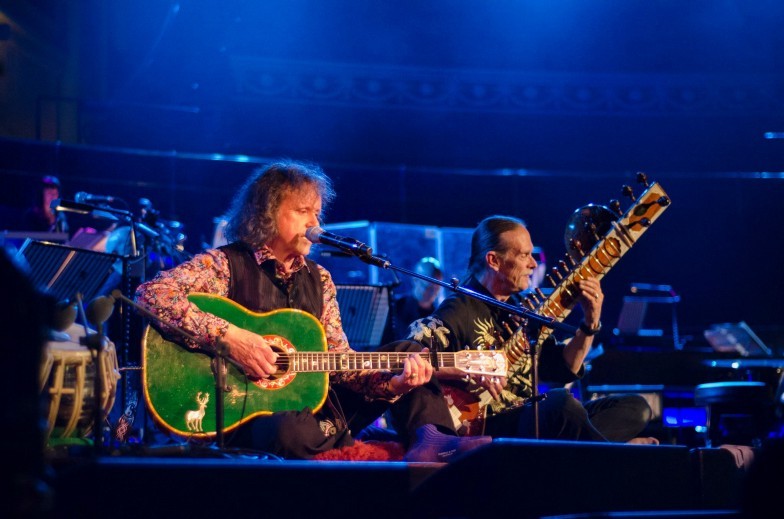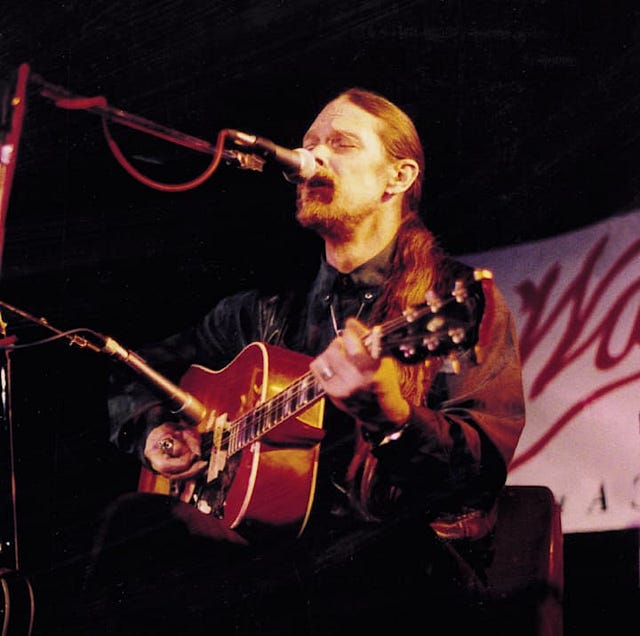
To be the first at anything is a rare privilege.
In 1994, the artist I managed, Shawn Phillips, was invited to tour the newly liberated South Africa in commemoration of Nelson Mandela’s election. What neither of us fully understood when we boarded the plane was just how deeply Shawn’s music had become woven into the country’s history.
During the years of the American cultural embargo against South Africa, Phillips had quietly developed into something of a mysterious musical legend among people who opposed apartheid.
I had asked Shawn a simple question:
“Do you have any concert leads for me?”
“I heard rumors that I might be popular in South Africa?” he replied.
“All right,” I told him. “I’ll start there.”
“Want to celebrate the birth of a new nation?”
After canvassing South Africa by phone, I finally received an answer from festival promoter David Marks.
“Want to celebrate the birth of a new nation?”
His message described Splashy Fen, a five-year-old South African music festival created to bring people together through music. The country’s first free democratic elections were scheduled for April 27, 1994.
The invitation was extraordinary. We would be among the first American musicians to perform in South Africa after the cultural embargo.
Then I discovered something even more remarkable.
David Marks was the same sound man I had met at Woodstock in 1969.
The entire tour came together in about a week. That gave me very little time to understand the complicated politics of South Africa—or Shawn’s extraordinary history there.
Shawn had released 17 albums, many of them multimillion-selling records. In South Africa, I learned, he had achieved triple-platinum status. Yet Shawn had never received a royalty statement for the territory.
“Did you ever get a royalty statement for South Africa?” I asked him.
“No,” he said. “I only got the information second hand from a South African who said they saw my records in the stores.”
That question would follow us throughout the tour.
Flying into history
As I copied the last words of David Marks’ fax into my travel diary, the captain of South African Airways flight 202 announced:
“At 5 a.m. you will see the sunrise over Africa.”
I would see more than a sunrise.
On April 26, 1994, Johannesburg newspapers carried reports of bombings across the country. Ten people had been killed and dozens injured. The political transition was taking place against a backdrop of fear and uncertainty.
I showed the headlines to Shawn.
“A rock ‘n’ roll tour in South Africa?”
But Shawn wasn’t interested in the money.
“I think a lot of my music really relates to what’s going on over there right now,” he told me. “Compassion for the human condition has always interested me. I want to share it with my fans. That’s why I want to perform in South Africa, no matter what the risks.”
He said it with conviction.
I was glad he had made up his mind.
During the flight I read Nelson Mandela’s Long Walk to Freedom. The more I learned, the more I wondered how Shawn’s music had found its way into this story.
Before we landed, the pilot announced that part of the international arrivals section of the airport had been destroyed. Fortunately, no one had been hurt.
When we finally entered the terminal, we were routed around piles of debris.
At customs, I found myself standing behind actor Danny Glover, a well-known Mandela supporter. Officials glanced at our passports and waved us through.
Then came the press conference.
“How do you feel to be the first American musician?”
Journalists from South Africa’s major newspapers, television stations, and radio networks were waiting for us.
“Welcome to the new South Africa, mate. How do you feel to be the first American musician to tour in our post-apartheid country?”
Shawn smiled.
“I think it’s the most exciting thing I’ve done.”
They asked him whether he knew how popular he was in South Africa.
“No, I’ve only heard rumors.”
They asked what he thought about the country’s situation.
“Change was inevitable, and you have a great leader.”
They asked him to describe his music.
Shawn answered with a story about Edgar Winter once asking him how a musician from Texas could have gotten so far from the roots.
“Because there’s a whole tree above the ground, Edgar!”
The questions continued—about his lyrics, South African music, Paul Simon’s Graceland, Johnny Clegg, Sipho Mchunu, and Ladysmith Black Mambazo, who would also appear at Splashy Fen.
Then a reporter asked whether Shawn planned to visit the shanty towns and see what apartheid had done to the country.
“I would certainly enjoy absorbing all South Africa has to offer and share it with the world, anyway I know how.”
Election Day
On April 27, we met our tour promoter, Theo Coetzee, at his home in Randburg.
Johannesburg’s white suburbs were heavily guarded. Security bars covered shops. Private security and electrical razor wire surrounded homes.
Yet outside, something extraordinary was happening.
On the way out of the city, we passed a voting hall where Afrikaners, British, Zulu, Ndebele, Venda, Xhosa, and Indian people—speaking more than eleven different languages—were laughing and crying together.
For the first time in history, they were voting together.
Mandela supporters ran through the streets waving flags and shouting, “Tata”—Father.
Theo switched on the radio.
The South African Broadcasting Corporation was broadcasting interviews with Nelson Mandela, presidential hopeful Mangosuthu Buthelezi—and Shawn Phillips.
“Who is listening to this broadcast?” I asked.
“All of South Africa,” Theo replied.
That stopped me cold.
We were heading into a country on the edge of an uncertain future, and somehow the music of a Texas-born American singer-songwriter was part of the soundtrack.
The road to Splashy Fen
We had a 500-mile journey ahead of us to Splashy Fen, deep in KwaZulu-Natal.
The highways were crowded with armored convoys and security checkpoints. Police wanted to know what was inside Shawn’s music cases. Theo talked us through each checkpoint.
As we moved away from Johannesburg, the landscape opened into the Highveld—broad, grassy country that reminded me of the American West.
Then the demographics changed.
The villages became predominantly black African. We passed communities living in conditions I had never witnessed before: homes constructed from whatever materials were available, no electricity, no running water, people sleeping on straw mats over floors made from cow dung.
It was my first trip to a developing country, and the experience opened my eyes to the living conditions that generations of South Africans had endured.
We kept driving.
Then came the Drakensberg Mountains.
Rain, darkness, fog, winding roads and cattle slowed us down. Hours behind schedule, we finally found a hand-painted sign:
Splashy Fen — 15K
Ahead of us was bumper-to-bumper traffic.
Then the storm hit.
Within minutes, our van was buried in a foot of mud.
Splashy Fen
Somehow word reached Bart Fokkens, the festival manager.
“Sawubona,” he greeted us in Zulu.
He explained how to get through the mud: deflate the tires, avoid the ruts, stay to the right—and whatever we did, don’t stop.
The next hour felt like a log ride at an amusement park.
Eventually we reached the musicians’ cottage, a warm, three-bedroom, thatched-roof house with a fireplace. I invited about a dozen musicians out of the rain to stay with us.
That first night was unforgettable.
The festival grounds owner, Peter Ferraz, his wife, and their three daughters welcomed us with guitars, wine, food and smiles. Musicians gathered around the fire and played late into the night.
After nearly two weeks on the road, I finally had access to a telephone.
My daughter Danika was four years old. I had been unable to call home because of the schedule and the eight-hour time difference.
Hearing the voices of my wife and daughter was one of the best moments of the trip.
I could finally tell them I was safe.
The Woodstock of South Africa
The next morning, I stepped outside and wondered:
Am I really here?
Above us rose Dragon’s Head, one of the great peaks of the Drakensberg Mountains.
Below it, thousands of people moved through the rain—flower children, new-age travelers, professionals, teenagers, toddlers, musicians and fans. Campfires smoldered beneath the freezing drizzle while tent doors flapped in the wind.
It looked like Woodstock transplanted into the mountains of South Africa.
There were food gardens serving Bunny Chow and Zulu porridge, regional beer, guitars everywhere and music coming from every direction.
Shawn walked through the campground meeting fans who recognized him immediately.
“Far out,” one young person said when he discovered who Shawn was.
Another offered Shawn a marijuana cigarette.
Shawn politely declined.
“Besides water, I never put anything into my body before I perform.”
The festival lineup featured roughly thirty bands and some extraordinary South African musicians.
I discovered Guitars for Africa, a compilation featuring 24 South African guitarists, and was especially impressed by Sipho Mchunu’s unique Zulu guitar technique.
Keep the Change opened with a version of Joni Mitchell’s “Woodstock,” changing the lyric to:
“By the time I get to Splashy Fen...”
The crowd loved it.
Then came Ladysmith Black Mambazo.
The legendary vocal group, known around the world through Paul Simon’s Graceland, filled the tent with their powerful a cappella harmonies. When they performed “The Lion Sleeps Tonight,” the crowd erupted.
The University of Natal African Music Ensemble followed with handmade instruments and music rooted in Uganda, Zimbabwe and Mozambique.
There were folk musicians, political satirists, rock bands, jazz musicians and artists from across the region.
More than 5,000 people had gathered.
And there was no violence.
Shawn takes the stage
Later that night, Shawn would perform.
The conditions were brutal. At roughly 6,000 feet, combined with heavy fog and cold mountain air, it was difficult for him to sing and keep his guitars in tune.
But he went on anyway.
When Shawn walked onto the stage, the entire campground seemed to hold its breath.
I could feel the anticipation moving through the ground and up the back of my neck.
I had first seen Shawn when I was fifteen years old.
Now I was standing backstage watching him perform for thousands of people in a country where his music had somehow survived a cultural embargo and become part of the underground soundtrack of a struggle for freedom.
It felt like a reunion.
A country that had been isolated from the world was finding its way back.
And on that mountain, music was opening the conversation.
Where did the royalties go?
Backstage, I spoke with David Marks about what had happened to the South African music business during apartheid.
He told me about trying to collect royalties on his hit song “Master Jack.” When he contacted the American record distributor, he said the publisher called him a racist and hung up.
I decided to pursue Shawn’s missing royalties.
I arranged a meeting with the South African record company that had been selling Shawn’s records during apartheid.
“Where is the money for Shawn Phillips’ records?” I asked the label executive.
His response stunned me.
“That was too long ago. I’m sorry. We no longer have financial records dating back to that period. How about a couple of record awards, mate?”
I couldn’t believe it.
“Surely, there must be some accounting for hundreds of thousands of records sold?”
He rolled his fingers across the desk.
“Sorry mate. We sent the money to where it was supposed to go, and where it went from there, I don’t know.”
The missing royalties would eventually become part of a much larger scandal involving artists whose careers and lives had been damaged by the music business during the apartheid era, including Rodriguez and Shawn Phillips.
Music could change the world
During the festival I met South African musicians who had spent their lives carrying their culture through music.
Zulu musician Zakes Myataza told me:
“My grandmother taught me to throw harmonies like bones: both tell the future.”
Xhosa percussionist Enoch Lengoasa offered another thought:
“Every tribe has its own record of dreams. Ours is the praise song.”
Splashy Fen was, in the best sense of the Afrikaans expression, lekker cracker—super good.
Hundreds of musicians performed nearly every kind of music imaginable. More than 5,000 people listened together.
The country had taken its first steps into a new era.
South Africa would soon become one of the world’s great tourism destinations, and its music would finally begin finding the international audience it deserved.
But much of the country’s musical history—and the role music played in the struggle against apartheid—was never professionally documented.
David Marks eventually founded the Hidden Years Archive Project, preserving decades of South African independent and indigenous music.
I returned home to Minneapolis convinced of something I had already suspected when I was a teenager listening to records:
Music can change the world.
Sometimes it does it one song at a time.
Sometimes it brings together people who have been separated for generations.
And sometimes, if you’re lucky enough to be there, you get to watch a country begin to change while the music is playing.